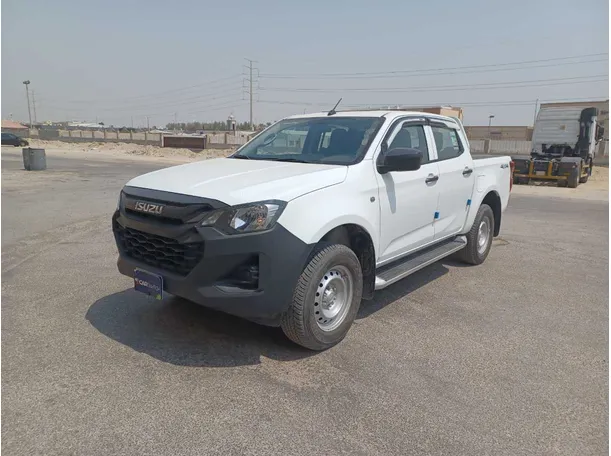
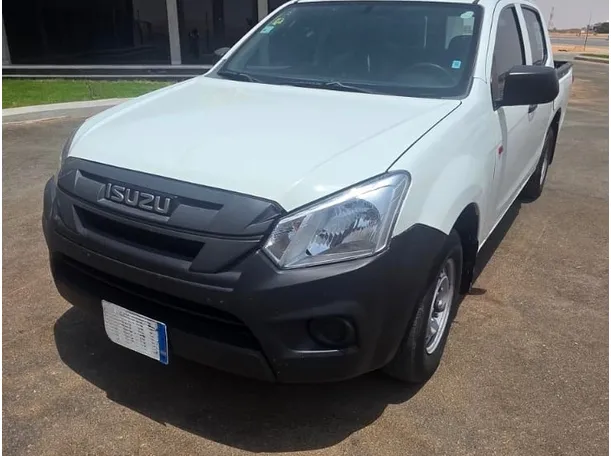
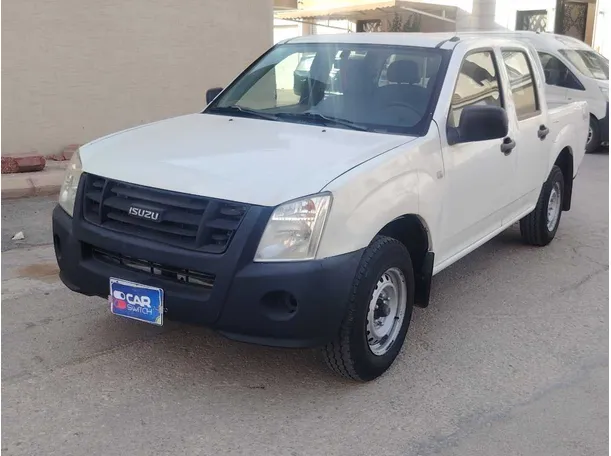
Few pickups sold in Saudi Arabia stretch as far as the D-Max does. One end is a bare single cab bought purely to work; the other is a raised, big-tyre desert build. Between them sit diesels of 1.9, 2.5 and 3.0 L, all built to run long past the point most cars are retired.
Is a used D-Max the better buy?
Often, yes. An early-2020s example generally sits around SAR 50,000 to SAR 70,000, roughly 28% below the new entry price, which is about SAR 20,000 saved for a truck with most of its working life ahead of it. The catch is that used pickups here have usually earned their keep, so budget for tyres and a full inspection.
Decide on the engine before the cab — on this truck it changes the running cost more than anything else does.
How much does the Isuzu D-Max cost in Saudi Arabia?
SAR 69,000 puts the Single Cab 2WD on the road — one row of seats, two-wheel drive, nothing spare. Double cabs start with the small 1.9 diesel and climb through 2.5 and 3.0-litre four-wheel-drive versions, and the automatic arrives only near the top. The Arctic AT35 4x4, at SAR 144,900, is a specialist off-road conversion rather than the next trim up.
Which D-Max trim is the one to buy?
A 3.0-litre four-wheel-drive double cab is the sweet spot for private buyers: enough torque to tow and climb loaded, four doors, and the equipment most people expect. The 1.9 versions are honest fleet trucks and noticeably cheaper to run, but they work harder on long hauls. Only take the automatic if the truck spends real time in city traffic.
Isuzu D-Max or Toyota Hilux?
Choose the D-Max on economics: it is cheaper for a given payload, the diesels are famously unbothered by heat and distance, and parts are inexpensive. The Toyota Hilux has the deeper dealer coverage and the faster resale, which is the honest argument against the Isuzu. The Nissan Navara is the more comfortable everyday drive of the three.
What does a D-Max cost to run in Saudi Arabia?
Very little for a vehicle this size. Diesel consumption stays flat whether the bed is empty or loaded, and the maintenance schedule is short on expensive items. Distribution sits with the commercial-vehicle trade rather than a retail showroom network, so confirm your nearest authorised service point and what the warranty covers before signing.
Does the D-Max hold its value, and what should you watch for as it ages?
It holds about 59% of its value after five years, a little ahead of the 56% typical of mainstream Japanese vehicles here. The mileage figure matters more on a pickup than the percentage: the D-Maxes CarSwitch inspects come in at a median of around 150,000 km, so age tells you far less than how the truck was loaded and where it was driven. Check the chassis, the rear suspension and the bed mounts on the individual vehicle — that is what the inspection report is for.


 Hi Guest