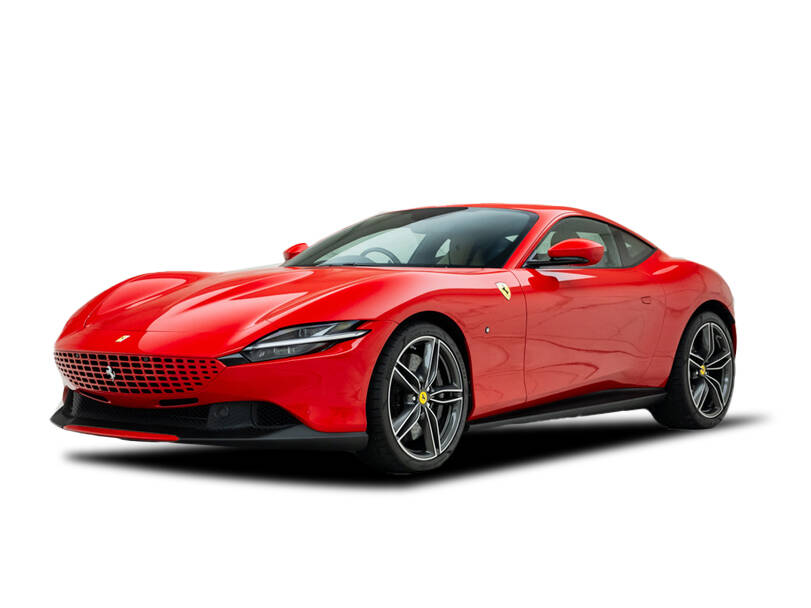
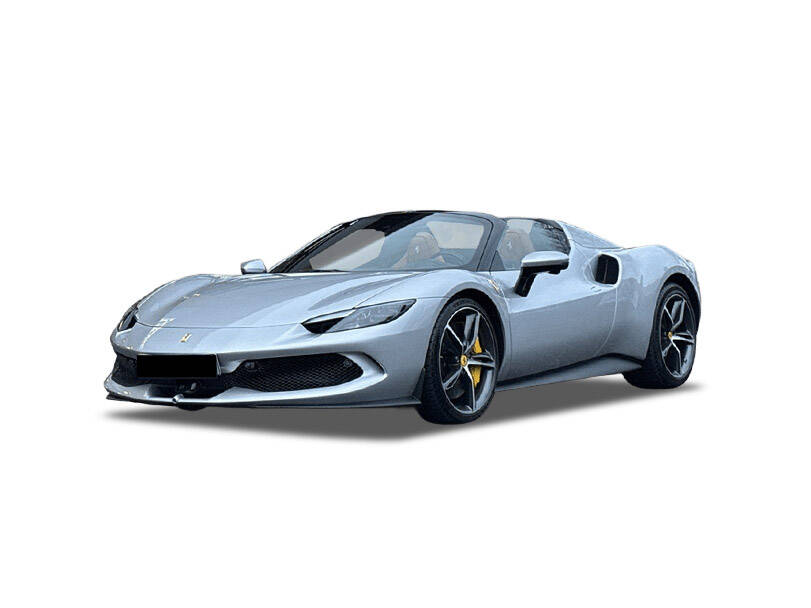
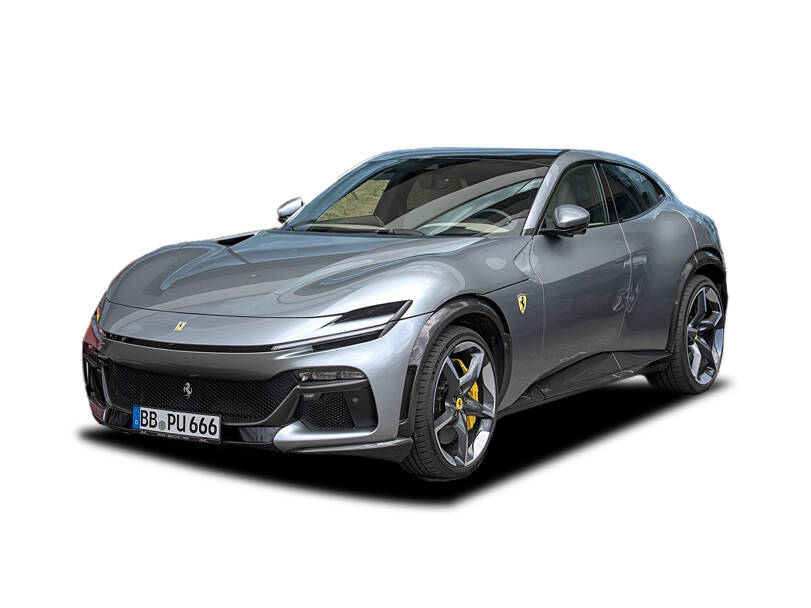
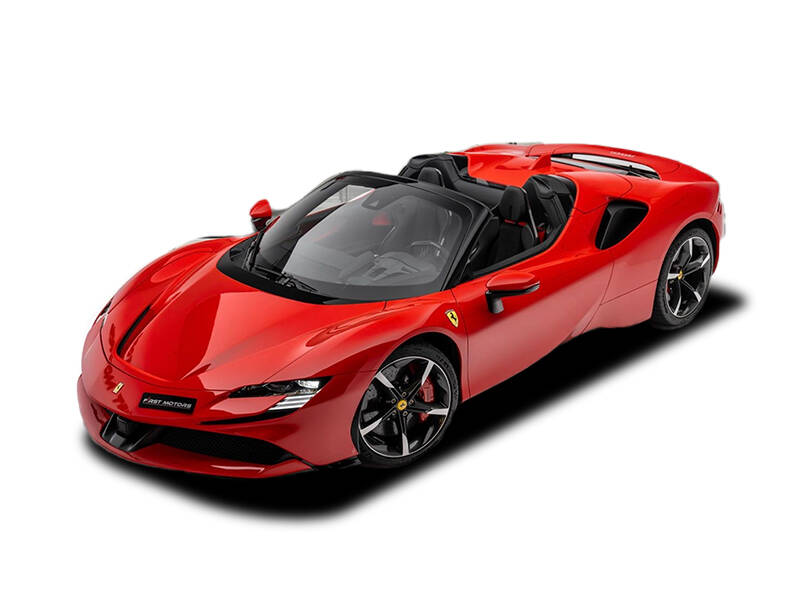
Ferrari's front-engined GT sits at the opposite end of the brand from the mid-engined cars: a twin-turbo V8 mounted behind the front axle, a 2+2 cabin, and a shape with almost no wings or vents on it.
Take one on a long drive rather than a short one; the Roma makes its case over distance, not from a standing start.
How much does the Ferrari Roma cost in Saudi Arabia?
One specification is listed at SAR 980,000, and it is the accessible end of the marque here — the cars above it run from SAR 1,550,000 to SAR 2,550,000. The standard car is relatively unadorned, so the configuration you choose has more effect on the final figure than on most rivals.
What is the Roma actually for?
Long distances at speed, in comfort. The V8 is quoted at 620 bhp bhp with 760 Nm and a 320 km/h maximum, but the point of the layout is that the car stays civil when you are not using any of it. Four seats, a usable boot, and far better forward visibility than the mid-engined models.
Ferrari Roma or 296?
Take the Roma if the car has to work as transport as well as an occasion — it is quieter, softer, more practical and much easier to live with day to day. The 296 is the faster and more exciting car by a wide margin, and the SF90 is quicker again but harder work.
What should you know before buying one?
That servicing runs through the authorised network, because the diagnostics and parts supply sit there and nowhere else, and that a complete stamped history is the single strongest factor in what the car is worth later. Tyres and brakes are the recurring costs. Garaging matters too — sustained heat is hard on paint and interior hide.


 Hi Guest